Serial entrepreneur with 25+ years & 2 exits. Led a publicly traded company to £250M+ valuation. I share the strategies that actually work for scaling businesses & developing leaders. 10,000+ founders read my weekly insights on growth, M&A, and building winning cultures.
Share
The most valuable thing you’re probably not measuring | The Growth Mindset
Published 3 months ago • 5 min read
Hi Reader
January can feel oddly suspended for businesses, particularly smaller ones. Decisions meant to be settled in December drift on, budgets hesitate and the post-Christmas lull hangs around longer than anyone planned. Earlier in my career, that inertia used to feel unsettling. Now I’ve seen the pattern often enough to trust it. By the end of the month, momentum returns quickly and inboxes fill almost overnight. For the moment, there’s still space to read, think and look a little ahead before everything accelerates again.
Enjoy!
Reputation now has a price tag
For decades, corporate reputation has been treated as something leaders instinctively knew mattered but struggled to quantify. New research from Burson puts a hard number on it. Analysing 66 publicly listed companies, the study finds that reputation contributes an average 4.78 per cent a year in additional shareholder returns beyond what financial performance alone would predict – adding anything from millions to tens of billions in value. What changes is not just measurement but accountability: reputation can now be tracked continuously and linked to specific drivers such as workplace culture, governance and leadership. One finding is particularly uncomfortable. Workplace reputation shows the widest performance gap, yet ranks low in executive priority – a mismatch that becomes riskier as AI reshapes how people experience work. Read the report here.
Jony Ive on what “care” looks like in a product
Sir Jony Ive, the designer behind many of Apple’s defining products and now founder of LoveFrom, recently spoke with Stripe CEO Patrick Collison about what sits beneath good design. Ive’s argument is that care, values and intent are not abstract ideas – they show up in objects, software and systems, and people can sense when they’re missing. He’s particularly strong on how teams confuse opinion with insight and how measurable constraints can crowd out judgement. If you build products or lead teams, it’s a great take on craft from an eminently likeable (and super smart) chap. Watch it on YouTube here.
A practical guide to doing better creative work in 2026
The RECESS 2026 Creative Playbook isn’t a trend report or a skim-once inspiration deck. Built by 48 creatives in 20 countries, it’s a 220-page working manual for people who take craft seriously and want to think clearly about how tools, teams and judgement interact. The most useful parts are the way it shows experienced practitioners deciding where to use AI, where to resist it and how to protect quality under pressure. It rewards dipping in rather than reading cover to cover and it’s especially good when execution is moving fast and you need a strong sense of what not to automate. Get the playbook here.
Why marketing is obsessed with killing things that still work
Ad industry guru (and professional grouch) Mark Ritson recently took aim at marketing’s favourite hobby: announcing the death of channels that continue to work perfectly well. From PR and TV to brands and email, his point is that marketing systems don’t vanish, they adapt. The industry has been here before, whether it was radio, home video or email, all pronounced finished long before they proved otherwise. The value in his piece isn’t nostalgia or defence of the old world, but a reminder that attention-grabbing predictions often confuse change with extinction. It’s a useful read if you’re wondering whether that door drop direct mail will still deliver results. Adweek has the story.
The AI bill nobody is pricing in
A deep investigation from MIT Technology Review traces what powers everyday AI use – from a single prompt to the data centres, grids and energy deals being built around it. The striking finding isn’t that one query uses little electricity; it’s that inference, video and agents scale demand faster than anyone can currently measure, while the underlying numbers remain largely opaque. As AI gets embedded into search, apps and workflows by default, this becomes an infrastructure and accountability question, not a usage one. It’s one of the clearest looks yet at the second-order costs of “AI everywhere”. Read the report here.
LinkedIn reveals the UK’s fastest growing job roles
Rather than speculation, LinkedIn’s Jobs on the Rise 2026 list is grounded in hiring activity already underway. Looking at three years of hiring data, the fastest-growing roles span AI leadership and engineering, construction and infrastructure, advisory work and company building. The pattern is telling: demand is rising both for deep technical capability and for roles that help organisations navigate risk and change. For anyone thinking about reskilling, hiring priorities or where momentum is forming in the UK labour market, it’s a grounded snapshot of what’s hot and what’s not. Find out more here.
How big is the “ghost job” market?
While LinkedIn’s Jobs on the Rise list maps where hiring momentum has built up, a BBC report on “ghost jobs” highlights the limits of vacancy data as a signal. Research suggests a sizeable proportion of advertised roles are not genuinely open, distorting perceptions of demand and draining time and morale from jobseekers. The issue isn’t that growth is fictional, but that the market has learned to broadcast intent without commitment. In other words, many of these “ghost jobs” are from HR teams gathering potential candidates for roles that might be available in the future or, rather more sneakily, from companies trying to show investors that they are on a steep growth curve. Get the story here.
Gary Vaynerchuk’s five bets on what comes next
Although he can be a divisive figure, entrepreneur Gary Vaynerchuk has a track record of being early on cultural shifts others dismiss. He was way ahead of the pack in terms of predicting TikTok’s importance, for example. His latest Substack lays out five consumer trends he believes will shape 2026, from individuals turning audiences into full-blown businesses to the pull away from always-on screens, and from curiosity-driven content to the growing global influence of Africa and alternative sports. The style is characteristically brash, but the underlying logic is sound: platforms change, incentives shift and behaviour follows. It’s a reminder that culture often moves before strategy catches up. Check it out here. Oh, and since Gary is the king of the side hustle, I thought it was appropriate to flag this too – the fascinating depreciation of the sports shoe ‘flipping’ market.
AI prompt of the week: Meta marketing strategy for small business beginners
Most small businesses know they "should" be on social media but have no systematic approach – posting sporadically, guessing at budgets and wondering why competitors seem to get better results. The key isn't spending more; it's understanding the fundamentals: which Meta platforms suit your audience, how organic and paid work together and what realistic budgets achieve. Starting smart beats starting big.
Design a beginner's Meta marketing strategy for my small business. My context: [business type, target audience, monthly budget available]. Create: (1) Which Meta platforms to prioritise (Instagram/Facebook) and why, (2) An organic content strategy I can sustain (realistic posting frequency, content types, engagement approach), (3) How to start with paid ads – initial budget allocation, what to test first, (4) Competitive research framework - how to analyse what's working for competitors without copying blindly, (5) Success metrics to track in months 1-3 and when to adjust the strategy.
What acquirers look for in a buy-and-build target
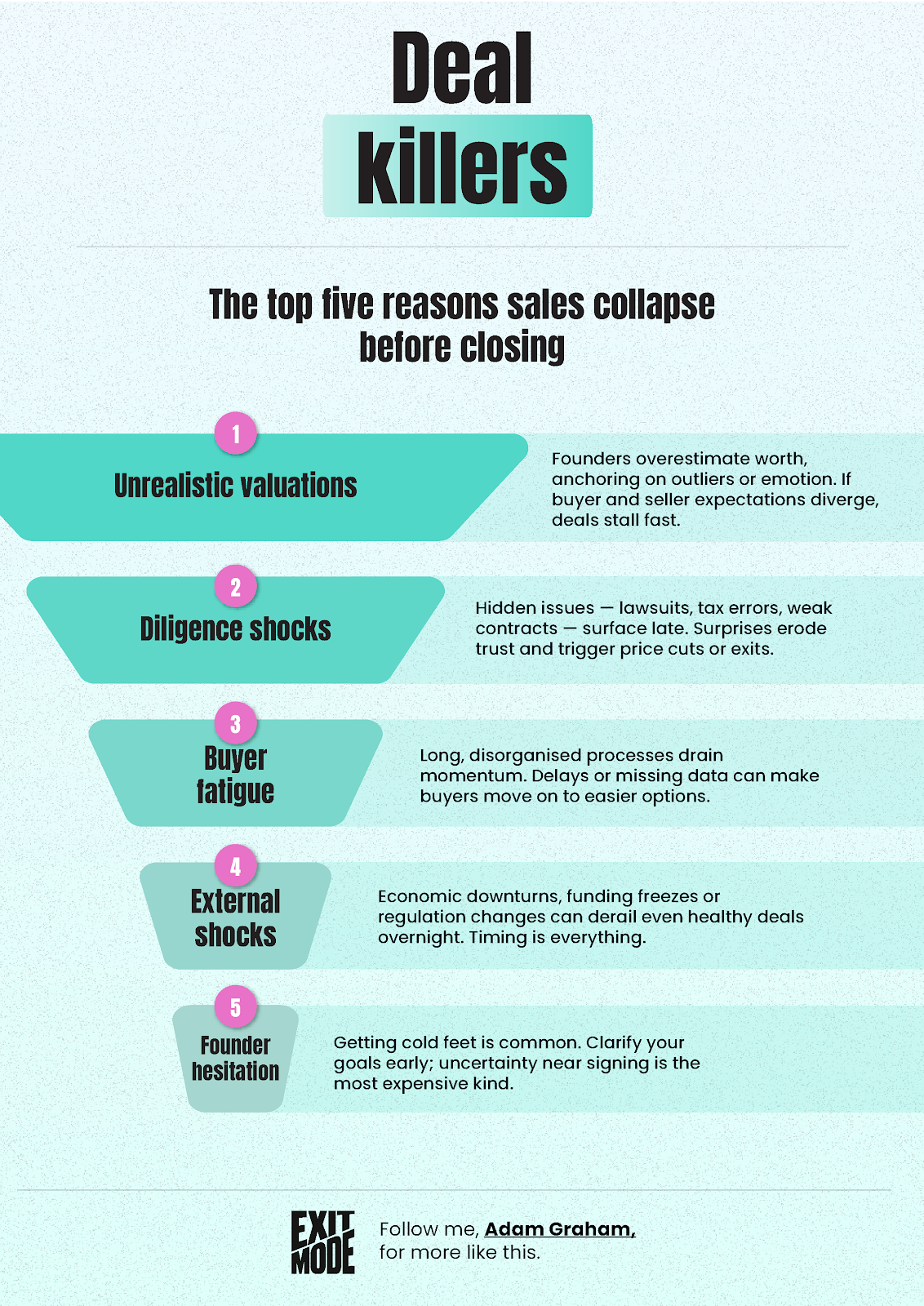
Buy-and-build investors aren’t hunting for one-off successes. They’re looking for businesses that behave like platforms: models that repeat cleanly, economics that hold up as volume grows, teams that don’t revolve around a single founder and markets where consolidation compounds value. This snapshot shows the signals buyers use to identify scalable operators.
Drop me a line
That’s all for this week – thanks for reading. Do get in touch if you want to discuss an idea or collaboration. I love hearing from readers and I reply to everyone. See you next Sunday.
Cheers! Adam
Get a 20% discount to the Apps Business Summit!
On 19 January, the Apps Business Summit lands at the Barbican in London as part of Pocket Gamer Connects London. It’s a brand-new, one-day event focused on the wider global app economy, and what apps and games can learn from each other.
Speakers and case studies will span the worlds of games and apps, with representatives attending from companies including TikTok, Moloco, Mistplay, Duolingo, Booking.com and loads more.
Serial entrepreneur with 25+ years & 2 exits. Led a publicly traded company to £250M+ valuation. I share the strategies that actually work for scaling businesses & developing leaders. 10,000+ founders read my weekly insights on growth, M&A, and building winning cultures.
Hi Reader Welcome to this week's edition. There's a leadership thread running through most of what caught my eye this week, from the biggest CEO handover in tech to fresh research on why founder transitions go wrong, and a few useful reminders that the most boring marketing fundamentals are still the ones that win. A good Friday batch heading into the weekend. Enjoy! The biggest succession story in tech finally has a date Apple confirmed this week that Tim Cook will hand the chief executive...
Hi Reader Welcome to this week’s edition. Early-stage credibility, stealthy second acts and the next turn of the AI wheel all show up in different guises here, but the through-line is simple: a few ideas that might change how you look at what you’re building, who you build it with and the tools you’re using along the way. Enjoy! The fastest way to build startup credibility One of the hardest problems for a new company is credibility. The best hires, customers and supporters usually move...
Hi Reader Welcome to this week’s edition. In between fundraising decks, shifting job markets and whatever TikTok is doing to our attention spans, it can be hard to find space to think straight – so consider this a short pause to look up, borrow a few ideas and then get back to building. Enjoy! JustFix is raising its next round One update from my own company this week. We’ve opened a new funding round for JustFix as we move into the next stage of growth. The company is raising £3m at a £12m...