Hi Reader
Welcome to The Growth Mindset, five minutes of essential, or occasionally quirky, insights for anyone building or scaling a business. Each week I share a handful of things I’ve bookmarked because they made me think more clearly or differently about work and decisions. Some are big shifts, some are small adjustments. All are useful in their own way.
Enjoy!
The rise of the always-on co-pilot
The big tech news this week was that Peter Steinberger, the developer behind OpenClaw, has joined OpenAI after building one of the fastest-growing open-source AI projects in recent memory. OpenClaw is an autonomous agent that runs on your own machine and connects to apps like WhatsApp and Slack. It can read and send emails, control a browser, manage files and execute commands. It runs continuously and can act on a schedule. Since launching in November, it has passed 100,000 GitHub stars and drawn millions of visitors. Steinberger is now heading to OpenAI to help build what Sam Altman calls “the next generation of personal agents,” while OpenClaw continues as an open-source foundation project.
For business owners, this marks a shift. AI moves from something you consult to something that operates. It can monitor your inbox, chase suppliers or handle background admin while you focus on decisions that move the business forward. I’m dusting off an old Mac to test it. If it works as promised, this could be a game changer for SMEs and start-ups. Reuters has the story.
When your customer's AI starts doing the shopping
The OpenClaw story shows how entrepreneurs can delegate work to autonomous agents. A new Harvard Business Review piece explores what happens when consumers do the same. The authors argue that brands need to think about “share of model” – how often and how accurately they appear in AI-generated responses. As agentic tools move from research assistant to transaction layer, companies face three practical decisions: whether to build their own brand agents, how to encourage customers to use them and how to ensure independent AI agents recommend their products. If personal agents become the interface between buyer and brand, visibility shifts from search rankings to model outputs. Find out more here.
How to do your best work
Paul Graham, co-founder of startup accelerator Y Combinator and a prolific technology writer, has published a long essay on what produces exceptional work across all sectors. His argument is straightforward: follow genuine curiosity, learn enough to reach the edge of a subject, notice gaps others miss and pursue them. Sustained focus on important problems, combined with independent thinking, is what leads to original contributions. It’s a substantial read but worth the time. Check it out here.
The 85% rule for getting more done
Rhymer Rigby, one of my favourite business journalists, describes what happened when a self-confessed “high-functioning slacker” was forced into three months of sustained hard work. His takeaways are practical (and often amusing): make most decisions quickly, aim for 85 per cent rather than perfection, protect sleep and exercise, keep tight task lists and recognise when your brain has switched off for the day. The most useful line comes from a CEO friend: if 60 per cent of decisions are right, you’re having a good day. For founders prone to overthinking or polishing the last 15 per cent, that’s a helpful reminder that speed often beats optimisation. The Times has the story (paywalled, so use Archive if need be).
Small businesses are leaning into marketing in 2026
Constant Contact’s Small Business Now survey, based on responses from more than 1,500 owners across the US, UK, Canada, Australia and New Zealand, finds that 68 per cent plan to increase their marketing budgets this year, while 74 per cent expect to spend more time on marketing. Inflation remains the top concern for 41 per cent of respondents and only 14 per cent anticipate cutting budgets. More than half are already using AI tools, mainly to analyse trend data and create content, with social media and email leading channel plans. The data suggests many small operators are entering 2026 with an expansion mindset and are using AI to support that push. Find out more here.
Meta prepares facial recognition for smart glasses
A report this week claims that Meta plans to add facial recognition technology to its Ray-Ban smart glasses, allowing wearers to identify people and retrieve information through its AI assistant. Internally referred to as “Name Tag”, the feature could launch as soon as this year. Meta has previously shut down facial recognition tools after legal challenges and paid billions in privacy settlements. The company is now exploring how and when to reintroduce the capability, including how visible the recording indicators should be. As AI agents move from inboxes and browsers into physical space, the boundary between assistance and surveillance becomes a product decision. Whether you think it’s creepy or cutting edge, there’s no denying that this is a meaningful development in how ambient AI may enter everyday life. TechCrunch has the story.
How James Watt made steam engines understandable
In a short and fascinating blog piece, advertising veteran Dave Trott revisits how James Watt didn’t just improve the steam engine – he re-framed it in terms people already knew. England ran on horses, so Watt invented the unit of horsepower to compare mechanical output in a language his audience understood. That simple act of translation helped steam power spread across industries and nations, and the term still lives on today. The lesson applies to anyone introducing something new: adoption accelerates when you express unfamiliar ideas in familiar terms. Check out Dave’s thinking here.
Buyers are arriving at the RFP stage with their minds half-made up
A survey of 350 business buyers suggests generative AI is now a mainstream discovery tool in B2B procurement. Two-thirds say they use AI chatbots as much as or more than traditional search engines when researching vendors. Most begin with five to eight possible suppliers and narrow that to three or fewer before formal evaluation begins. By the time a request for proposal is issued, buyers have already formed strong preferences. Even so, the final decision continues to hinge on the strength of the written response and demonstrated industry understanding. Pricing and feature fit matter, but buyers consistently prioritise evidence that a vendor understands the context of their sector and can articulate it clearly in formal submissions. Find out more here.
AI prompt of the week: professional hiring without the assessment fees
Professional personality and competency assessments like Hogan can cost hundreds of pounds per candidate – prohibitive for most SMEs. Yet structured assessment frameworks dramatically improve hiring decisions by reducing bias and revealing traits that predict success. The solution is building your own evidence-based framework using proven organisational psychology principles.
Help me create a comprehensive hiring assessment for [specific role]. My context: [company type], [sector], [location], [team size], [company stage], [key challenges this role solves], [our cultural values]. Design: (1) Behavioural interview questions revealing personality traits, work style and cultural fit relevant to our environment, (2) Competency-based scenarios assessing key skills, (3) Structured scoring criteria to reduce bias, (4) Red flags specific to this role/sector, (5) Reference check questions validating findings. Base this on proven organisational psychology principles for small businesses without access to expensive assessment tools.
Life after the exit
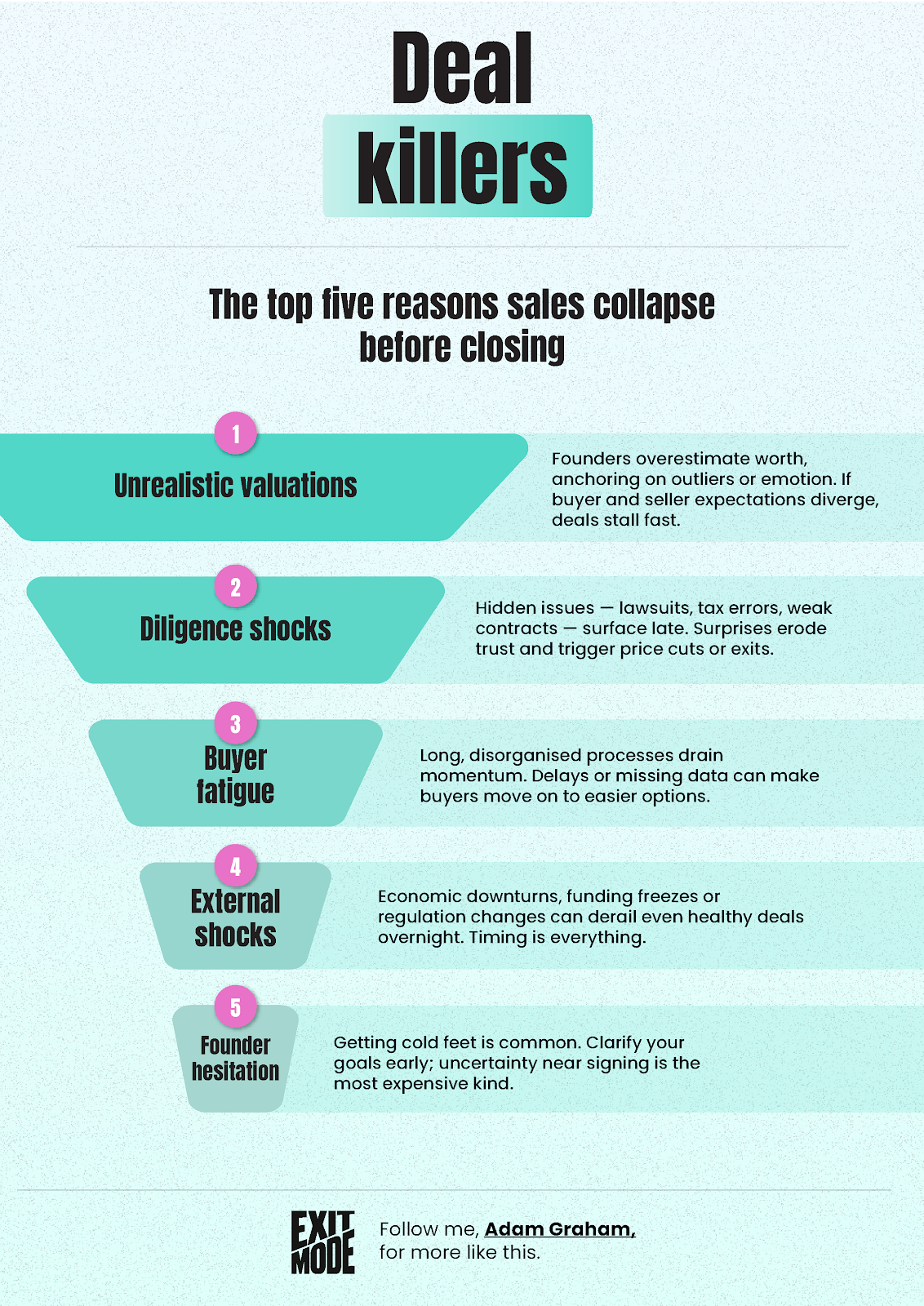
The moment a deal completes, a founder moves into a different phase of work and choice. Some remain to lead the next stage of growth under new ownership. Some shift into broader group roles. Others take an advisory seat, invest in businesses, launch something new or step away for a period of reset. An exit creates liquidity and space. What follows depends on how you want to use both.
Drop me a line
Maybe you disagree with something – or think I’ve missed something important? Send it over. The best additions to this newsletter usually start as someone pointing out what I didn’t see.
Cheers!
Adam
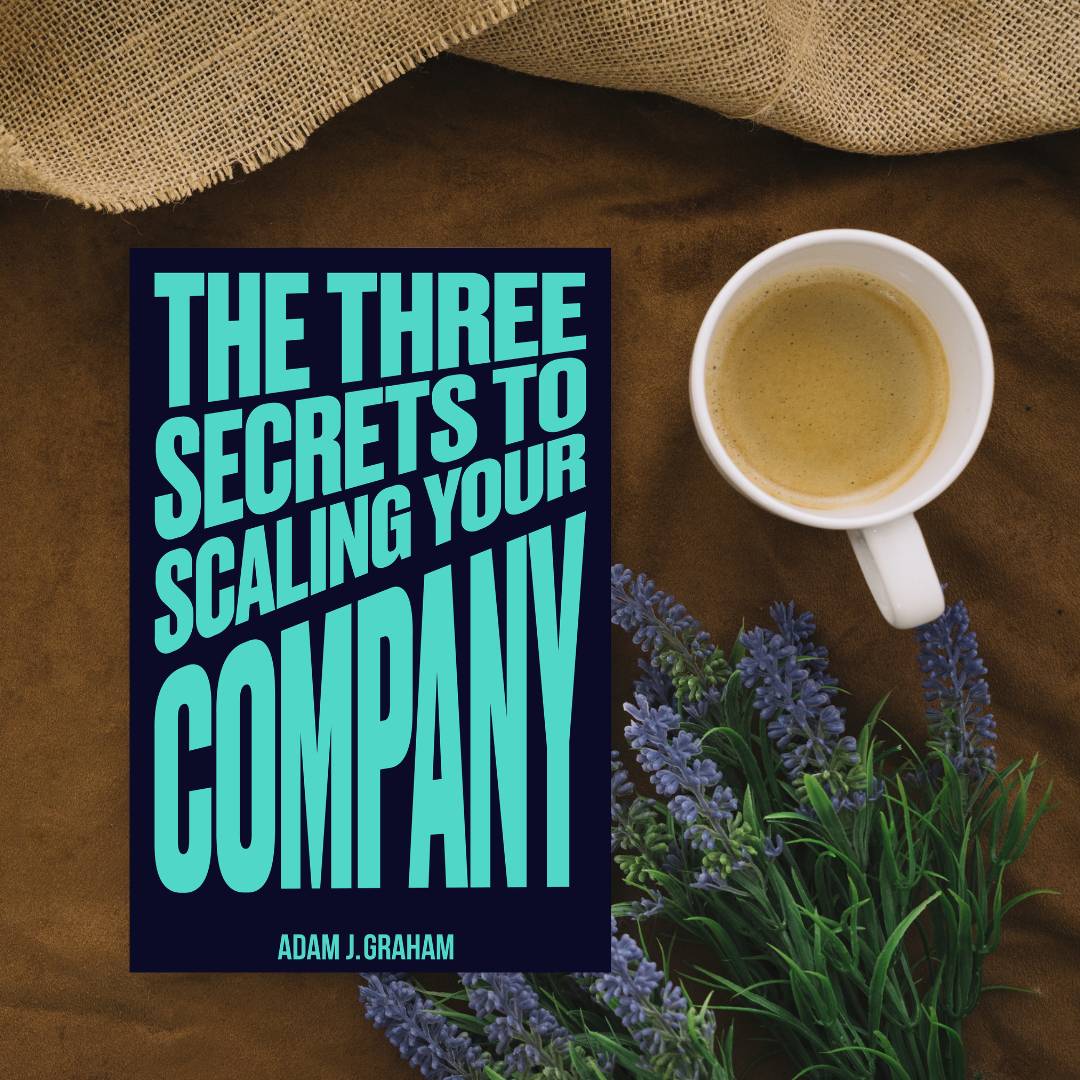 |
The Three Secrets to Scaling your Company
What does it really take to scale a company — and stay in control as you grow?
With expert insights from seasoned... Read more |