Hi Reader
Welcome to The Growth Mindset. It’s one of those weeks where the mood music of business feels slightly out of tune: markets jolted by a sci‑fi scenario, voters and communities starting to push back on AI’s physical footprint and founders wondering if they’re already behind the curve. In the middle of all that, the real work hasn’t changed much – building products people value, making thoughtful hiring decisions and finding ways to lead without burning out.
Enjoy!
The sci-fi post that sunk the financial markets
This week a speculative Substack post outlining a 2028 AI-induced economic collapse knocked US equities sideways. The S&P fell more than 1%, and shares in Uber, Mastercard and American Express slid after being named in the scenario. Days later, Citadel Securities published a detailed rebuttal pointing to stable unemployment, rising software job postings and the historically slow diffusion of new technologies. The data had not materially changed. What moved was the story. In previous cycles, markets reacted to earnings, policy or official economic data. In the AI era, they’re reacting to what is essentially a sci-fi story that may still be years ahead of reality. Truly, we live in interesting times.
Do people really want AI?
Alongside the debate about AI-driven job loss, another question is beginning to surface: does AI have a popularity problem? Polling in the US shows a population that is more wary than enthusiastic. At the same time, more than 3,000 data centre projects are reportedly in development and local resistance is growing in several states. For communities, AI infrastructure can look like capital intensity without obvious local benefit. That introduces a variable often missing from total addressable market projections: social licence. If approval processes slow, costs rise or policy shifts, the adoption of AI may be shaped as much by voters as by engineers. Keep in mind though that cars, the steam engine and the internet were all meet with early scepticism. There’s an interesting Substack post that delves deeper into all this – check it out here.
The fear of being left behind
A calmer response to this week’s AI panic came from Oliver Burkeman, the former Guardian columnist and author of Four Thousand Weeks. In his newsletter, The Imperfectionist, he argues that the scramble to become “ready” for what’s next rests on a false premise. The discomfort we feel isn’t proof that we are falling behind – it reflects the fact that uncertainty never disappears. AI has intensified this mood. There is always a new warning about shrinking windows to adapt or skills about to expire. The message being – act now or get left behind. In business, that belief is costly. Markets may swing on speculative scenarios and infrastructure politics may slow adoption, but decisions made from anxiety rarely improve outcomes. Steady adjustment tends to beat strategic panic. Read the Burkeman piece here.
Investors pivot to Europe
Some encouraging business news this week as European equities are on track for their highest monthly inflows on record, with global investors reducing exposure to the US and rotating toward markets weighted more heavily to banks, energy and industrial companies. The move follows a strong run for European indices and reflects a mix of diversification, valuation discipline and shifting macro expectations. Some analysts already warn the trade may be crowded and vulnerable to a pullback. Even so, the scale of flows is notable. If you’re raising, sector appetite matters. A year ago it was US tech concentration – now allocators are actively diversifying. This LinkedIn News story has some more detailed takes on it.
Job seekers are paying to get hired
In a sign of how competitive parts of the white-collar job market have become, some candidates are now paying so-called “reverse recruiters” to pitch them to employers, rewrite CVs and actively pursue roles on their behalf. Fees can run into the thousands of dollars or include a share of first-year salary if a job is secured. Traditionally, recruiters are paid by companies. The reversal reflects longer job searches, automated screening systems and a perception that simply submitting applications is no longer enough. Labour market stress does not always show up neatly in headline unemployment figures; it often appears first in behaviour like this. MSN has the story.
When academics become founders
Dr Irina Babina, a former cancer researcher now running a deeptech start-up, wrote a piece recently suggesting that some of the traits rewarded in academia translate well to entrepreneurship – and some do not. The strengths are obvious. Scientists are trained to test hypotheses, abandon ideas when the data contradicts them and operate comfortably in uncertainty. But other instincts can slow a company down. Optimising for grants is different from raising growth capital. Pursuing completeness can drain runway and assuming the lead researcher must automatically become chief executive is often an ego trap. The TLDR version is yes, you can partner with academics – but go in with your eyes open. Find out more here.
Why buyers trust people more than brands
LinkedIn’s latest B2B marketing research finds that thought leadership is increasingly driven by individuals rather than brands. Decision-makers report trusting expert perspectives more than company marketing, and creator-led content – aka influencer content – is engaging buyers well beyond early awareness. Buyers saturated with polished messaging are turning to people who explain how things work in practice. In that environment, the most credible voice is often not the company account but the person behind it. An underused asset in many organisations is their own employees, whose combined networks frequently exceed the brand’s following. For founders, keep in mind that expertise inside your business can function as a distribution channel in its own right. Read more here.
CEOs under pressure
A Korn Ferry survey finds that 71% of US CEOs report experiencing imposter syndrome, reflecting the strain of a role that has expanded sharply in recent years. Leaders are navigating rapid technological change, workforce tension, geopolitical risk and heightened public scrutiny, often simultaneously. CEO turnover has risen and short tenures are becoming more common. Expectations now extend beyond performance to include cultural leadership and public positioning on social issues. The role has certainly changed materially since I sat in my first CEO hotseat many years ago, and not all leaders are comfortable with its new breadth. Find out more here.
AI prompt of the week: hiring your first salesperson
Hiring your first salesperson is one of the trickiest early moves. You’re not looking for a “closer” but a builder – someone who can turn founder-led sales into a repeatable process. Hire too soon and they flounder; too late and growth stalls while you’re stuck selling everything yourself.
Help me design a hiring and onboarding plan for our first sales hire. My context: [company type], [product/service], [target customer], [current sales process], [founder involvement in sales], [team size], [company stage].
Create:
A success profile outlining key skills, traits, and experiences for our stage.
Behavioural interview questions that reveal execution style and resilience.
A 30/60/90-day onboarding plan with clear outcomes and early learning goals.
KPIs for the first 6 months balancing activity, pipeline and revenue.
Red flags to watch for early, based on common startup hiring pitfalls.
Base this on proven frameworks from startups that scaled founder-led sales teams into structured operations.
Rest is more than time off
Burnout is rarely solved by adding a day off. Different kinds of work drain different parts of us, and recovery needs to match the type of depletion. You can sleep well and still feel mentally foggy, socially anxious or creatively flat. The more precise you are about what’s exhausted, the more effective your recovery becomes.
Drop me a line
If this week’s mix has nudged a thought or helped you see something differently, I’m always curious which it was. Hit reply, tell me what you’re building, breaking or rethinking – you never know where these conversations will lead.
Cheers!
Adam
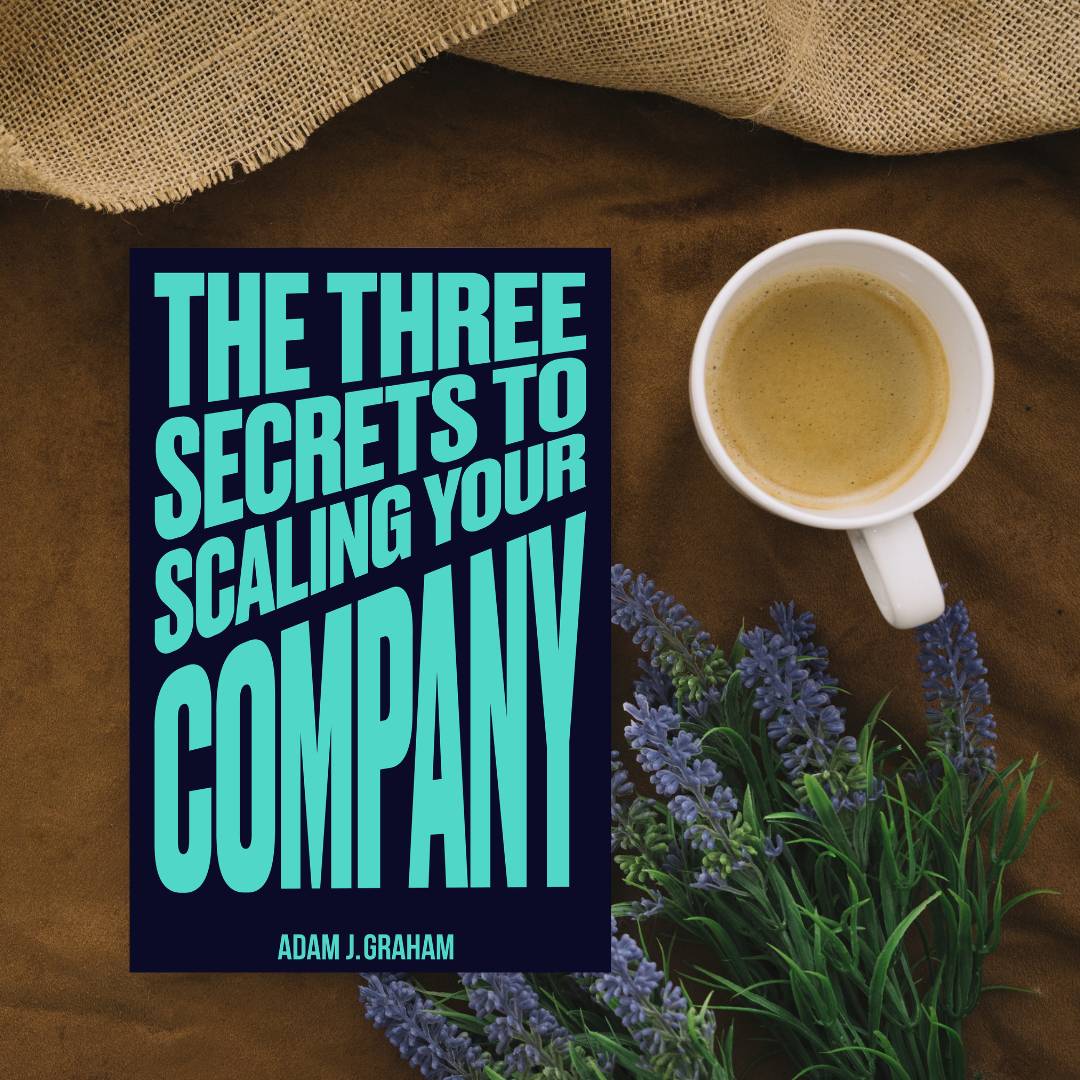 |
The Three Secrets to Scaling your Company
What does it really take to scale a company — and stay in control as you grow?
With expert insights from seasoned... Read more |