Hi Reader
Welcome to this week’s edition. In between fundraising decks, shifting job markets and whatever TikTok is doing to our attention spans, it can be hard to find space to think straight – so consider this a short pause to look up, borrow a few ideas and then get back to building.
Enjoy!
JustFix is raising its next round
One update from my own company this week. We’ve opened a new funding round for JustFix as we move into the next stage of growth. The company is raising £3m at a £12m pre-money valuation, with two options available to investors: straight EIS equity or a convertible bond paying a 12% annual coupon. The reason for the raise is straightforward. The core marketplace is working, customer demand continues to grow and we now want to accelerate product development and expansion. Raising capital always forces founders to clarify the next phase of the business. For us that means doubling down on what’s already working and scaling the platform in a disciplined way. If you’re interested in learning more about the round, drop me a line at adam@justfix.app.
What seven years inside Airbnb taught one product leader
I read a fascinating reflection this week from a product leader who spent seven years inside Airbnb during its hypergrowth phase. A few things stood out. At Airbnb, culture wasn’t treated as a side project – it was a strategic asset reinforced through rituals, hiring and decision-making. Goals were deliberately uncomfortable: Brian Chesky was known for doubling or even 10x-ing targets that teams thought were realistic. One example I liked was a project called “Snow White”, where the founders storyboarded the perfect guest and host experience like a film before building anything. The lesson was simple: imagine the ideal product first, then work backwards until it becomes possible. Across all the examples, the pattern is clear – great companies obsess over culture, clarity and focus. Find out more here.
The strange economics of the “boomcession”
A new term is emerging to describe the current economic mood: the “boomcession”. On paper, many indicators look strong. GDP is growing, consumer spending is resilient and markets have surged. Yet large numbers of people say their finances feel worse. Economists point to several forces behind the disconnect. Inflation has hit essentials such as housing and food hardest, while asset gains from rising markets accrue mainly to wealthier households. Spending growth is increasingly driven by the top income groups, leaving others feeling squeezed despite overall expansion. The result is an economy that can look healthy on paper while many individuals experience something closer to stagnation. CNBC has the story.
The case for “adventure work”
Productivity writer and computer science professor Cal Newport has a simple idea he calls “adventure work”. Newport – the author of books such as Deep Work (which I’ve read and recommend) – argues that some problems are better tackled away from the desk where you normally answer emails and messages. In one example, he describes working through a stubborn research problem during a morning spent walking around Berkeley with nothing but a notebook. The change of environment reduced distractions and helped him think more clearly about the problem. The broader lesson is that when work requires real thinking rather than reaction, a different physical context can unlock insights that rarely appear in the usual routine. Get his take here.
Why returnless refunds are on the rise
One of the more surprising shifts in e-commerce is the rise of the “returnless refund”. Instead of asking customers to ship products back, some companies issue a refund and tell them to keep the item. The reasoning is that reverse logistics – shipping, inspection, repackaging and restocking – can cost more than the product itself, particularly for low-value or consumable goods that cannot be resold. Several direct-to-consumer brands say removing returns has simplified operations and improved customer satisfaction. It’s a trade-off as the approach relies on trust and can invite abuse. Yet for some businesses the economics still add up. Modern Retail has the story.
Why younger workers struggle with workplace dynamics
Many managers say younger employees can’t deal with the unwritten rules of work. Handling criticism, resolving conflict within a team or knowing when to raise an issue with a manager are skills most people once absorbed gradually through school, early jobs and everyday social interaction. Psychologist Tessa West argues that many Gen Z workers missed parts of that learning process. Remote education and fewer in-person experiences during formative years have reduced opportunities to develop those instincts. The result is frustration on both sides. Managers assume new hires should already understand workplace dynamics, while younger employees often leave roles without fully understanding what went wrong. West argues organisations need to make expectations far more explicit, from how feedback is delivered to when conversations should move from Slack to a meeting. The Wall Street Journal has the story (paywalled so use Archive to access.)
Learning to speak the language of change
I’ve been reading Change Fluency by innovation strategist Jay Kiew, and one idea stood out. Kiew argues that change isn’t really a process that organisations manage. It’s a language that leaders either learn to speak or struggle to understand. The book mixes a near-future business story with practical lessons from large transformation projects, looking at why some companies stumble through disruption while others use it as a launchpad for growth. What I found useful is the framing around inflection points. Most organisations eventually face moments where the rules of the game shift. The leaders who succeed are usually the ones who recognise that moment early and adapt their thinking before everyone else does. Check it out here.
Why discovery is replacing search online
Search used to be simple. You typed a query and got an answer. But platforms like TikTok are changing the behaviour entirely. According to a new TikTok trends report, two-thirds of users search because they expect to discover something beyond what they were looking for. The journey now matters as much as the destination. People arrive with a vague intent and then wander through adjacent ideas, creators and communities. For founders, this changes how products get found: optimisation matters less than being interesting enough to pull people down the next rabbit hole. Get the report here.
AI prompt of the week: turn your LLM into a practitioner, not a theorist
Most AI answers are generic because the model defaults to explaining ideas rather than applying them. However, large language models respond strongly to role framing and constraints. A short instruction that changes how the model reasons can dramatically improve the usefulness of the response.
Act as a practitioner with deep real-world experience in this topic.
Avoid generic explanations.
Instead:
• Use frameworks or decision models
• Show how this works in practice
• Highlight trade-offs and failure points
• Suggest experiments or tests to validate ideas
Assume I want advice I could implement tomorrow.
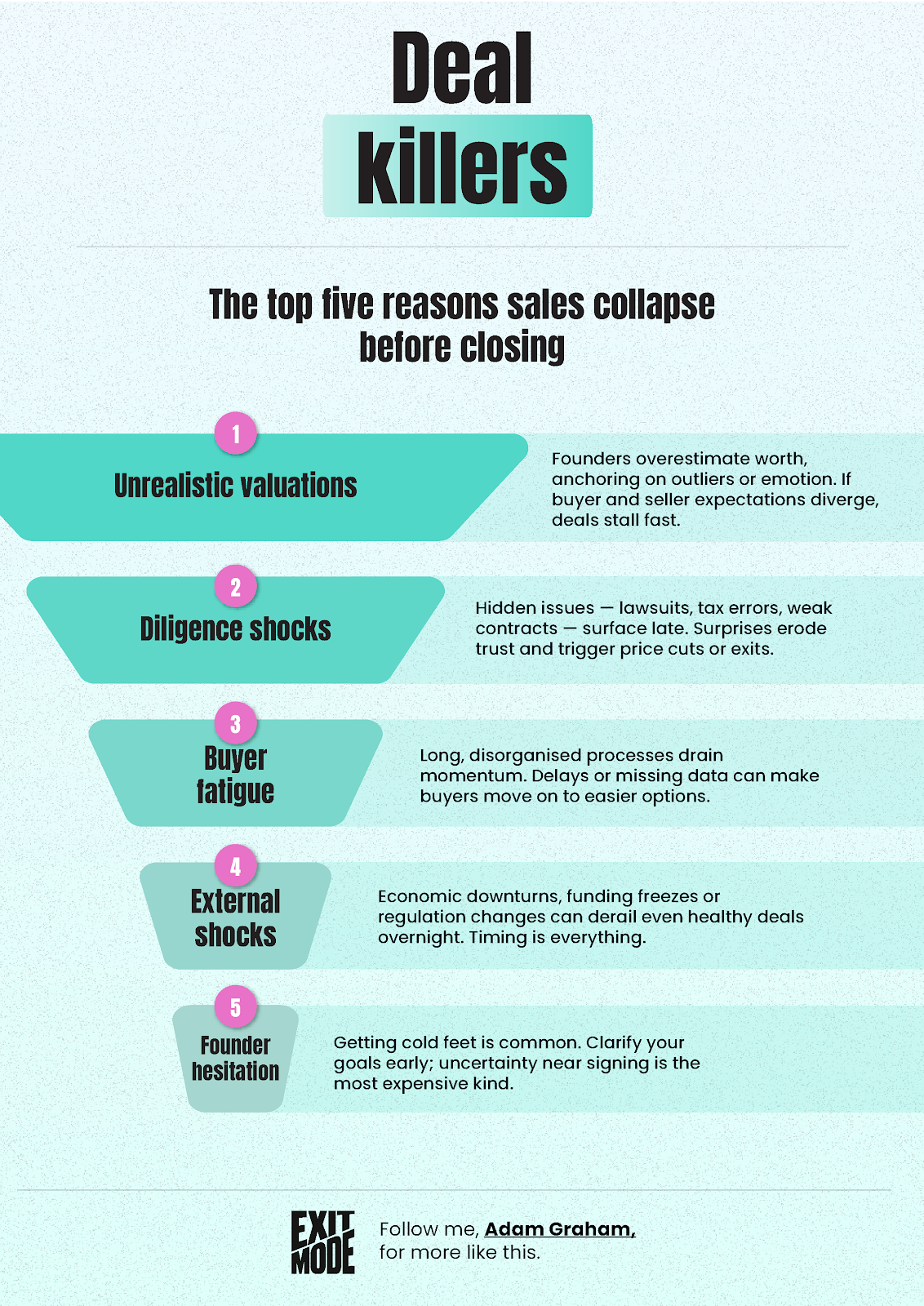
Six signs your company is starting to run without you
Long before a sale process begins, certain patterns start to appear inside a business. The founder becomes less central, revenue behaves more predictably and the numbers begin to tell a cleaner story. None of these shifts happen overnight – but together they signal something important: the company is starting to stand on its own two feet.
Drop me a line
If something in here connected with a challenge that you’re working through right now, I’d be curious to hear the story behind it. Hit reply and send a line from your side of the table – I can’t promise a solution, but I do read everything.
Cheers!
Adam
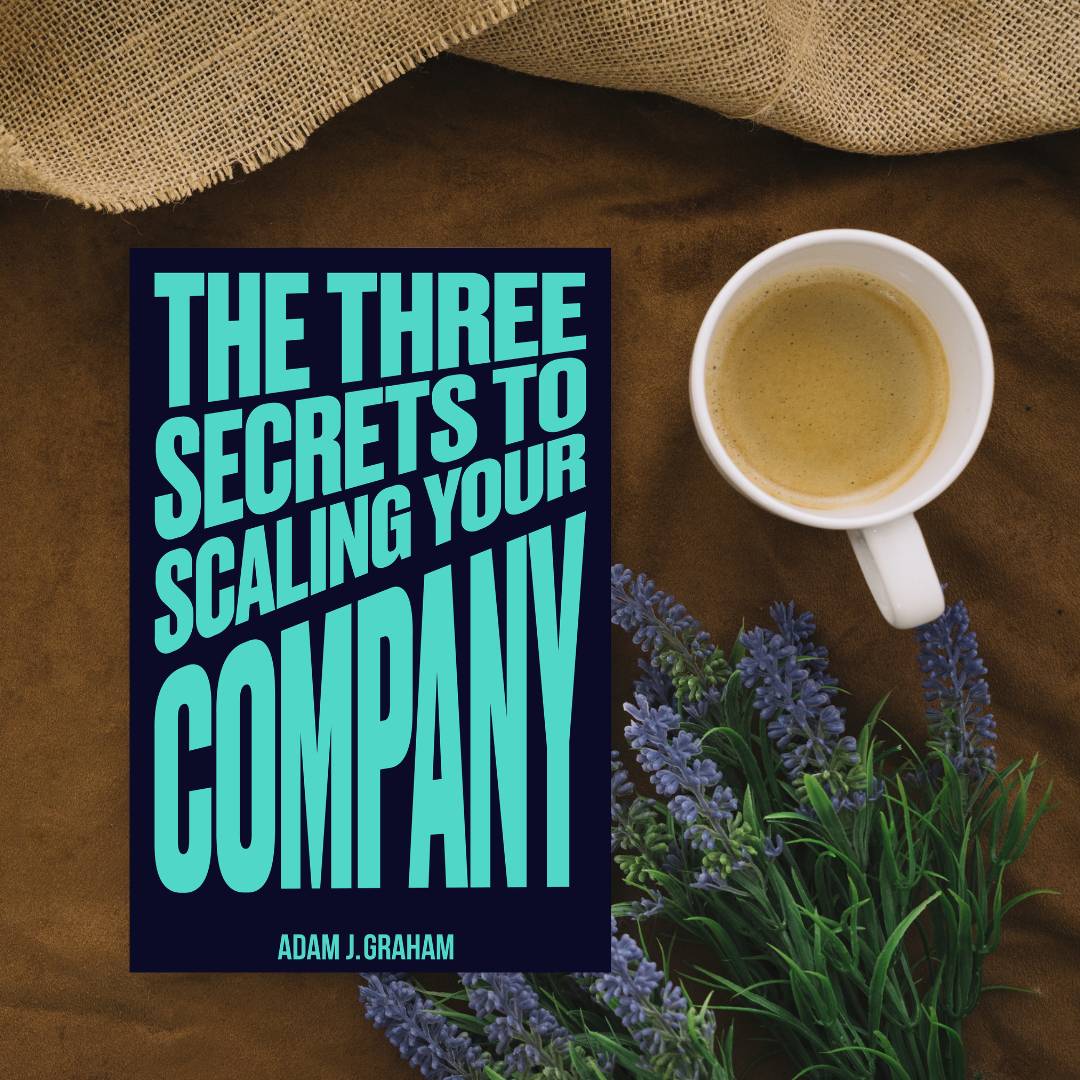 |
The Three Secrets to Scaling your Company
What does it really take to scale a company — and stay in control as you grow?
With expert insights from seasoned... Read more |