Hi Reader
Welcome to The Growth Mindset. Each week I share a handful of ideas worth thinking about if you build, run or invest in companies – delving into the patterns beneath the headlines. And a particular welcome if you’re reading this on LinkedIn. I’ve just opened up that channel and was genuinely surprised – and grateful – to see how many of you chose to subscribe there. Whether this lands in your inbox or your feed, the aim is the same: practical thinking for people building, backing or leading businesses that are meant to last.
Enjoy!
The three stages of startups
Most founders treat a company like a timeline: start-up chaos, product–market fit grind, then scale. Sequoia’s David Cahn argues the best ones don’t move neatly from opening to midgame to endgame. They hold all three in their heads at once. The opening is energy and invention. The midgame is operational momentum. The endgame is inevitability – the sense the company exists for a reason that stretches well beyond the next round. The founders who endure aren’t just good at one phase. They make product decisions with the end in mind, hire for reinvention even when things are working and create forward motion early. In other words, if you only optimise for the phase you’re in, you weaken what follows. Find out more here.
Why Britain’s CEOs don’t live in Britain
Almost a fifth of FTSE 100 chief executives now list their residence outside the UK, with bosses based in the US, Switzerland, the UAE, Hong Kong and elsewhere. It reflects the reality that more than three-quarters of FTSE 100 revenues are generated overseas. But it also suggests a bigger question. If customers, growth markets and pay benchmarks sit abroad, the “home” listing can start to feel symbolic rather than strategic. Relocation packages are rising, US pay comparisons are creeping in and primary listings have already begun to migrate across the Atlantic. The point here isn’t that executives travel. They always have. It’s that residence increasingly follows revenue, investor base and pay benchmarks. Where the chief executive lives indicates which market truly sets the rules. The FT has the story. (It's paywalled but you can access through Archive.)
AI experts predict what’s in store for this year
A useful round-up from TechRadar asks AI ethicists, psychologists and operators what will matter in 2026. The answers focus around trust, emotional dependence and safety. Expect more therapy-adjacent tools, deeper attachment to conversational systems and increasing debate over child protection. In the workplace, the shift moves from “can it do this?” to “can I trust this output?” The thread running through it all is one demand: systems built with safety at their core, not patched in later. To paraphrase that famous line from Jurassic Park, the question this year isn’t what AI can do – it’s whether it should. Find out more here.
New study shows Reddit is becoming a B2B discovery channel
HubSpot has partnered with Reddit on a new guide arguing that B2B brands need a deliberate presence on the platform as search behaviour shifts. A growing share of AI searches now end without a click, meaning buyers often get answers inside chatbots or AI summaries rather than on brand websites. Reddit threads are frequently cited in those responses and Google’s AI overviews increasingly surface them too. If your brand isn’t part of credible discussions in relevant communities, it may not appear in the research trail at all. The opportunity for 2026 is to treat Reddit less as a social channel and more as a place where buying intent is shaped in public. Get the report here.
Why unpaid media coverage matters more than ever
If Reddit threads and AI summaries are shaping how buyers research, then the sources those systems draw on matter. An Entrepreneur piece pushes back on the idea that visibility now requires payment. Genuine editorial coverage still exists – and it compounds over time. Articles remain searchable for years, journalists return to reliable sources and credible outlets influence how your company is framed. As AI tools pull from public sources, organic editorial coverage has a longer shelf life than paid spots – so keep looking for those PR opportunities. Find out more here.
Employers are now more trusted than the government
The annual Edelman Trust Barometer, a survey of nearly 34,000 people across 28 countries, suggests trust is narrowing. Seven in ten respondents say they are hesitant or unwilling to trust someone who differs from them. Only 32 per cent believe the next generation will be better off. The trust gap between high and low income groups has more than doubled since 2012, and more than half of low income respondents believe generative AI will leave them behind. The outlier is the workplace. Employees trust their own employer more than government, media or NGOs. For business owners, that shifts responsibility inside the organisation. Culture, clarity and leadership inside the organisation now carry more weight than ever. Read the report here.
AI is moving into family life
Two of Fitbit’s founders have resurfaced with a new venture that aims to coordinate health across entire families rather than track individuals. Their startup, Luffu, promises an “intelligent family care system” that organises medical information, watches for changes and flags concerns before they escalate. With one in four US adults now acting as caregivers, the strain is real. The interesting shift is not the app itself but the direction of travel. AI is moving from productivity assistant to background overseer of domestic life, stitching together health data, habits and alerts. As tools like this proliferate, it’ll be interesting to see whether trust, permissions and long-term engagement in a deeply personal domain becomes the social norm. TechCrunch has the story.
Read this before you enter an M&A process
European VC firm Frontline has published a useful piece outlining what happens when venture-backed companies enter an M&A process. The message is simple, if a little uncomfortable for some founders. Selling is neither automatic nor quick, and the capital stack shapes everything. Runway determines leverage. Investors have their own return thresholds. And waterfalls – the legal order in which sale proceeds are distributed – decide who gets paid and who walks away with nothing. Once your financial runway drops below six months, your negotiating position weakens rapidly. So acquisition is not a safety net – it’s a strategic path that requires planning long before you need it. Find out more here.
Management is becoming an AI superpower
A Substack article by Ethan Mollick suggests that as AI agents become faster and cheaper, the advantage shifts from execution to delegation. In an experiment with executive MBA students, teams built working startup prototypes in days by directing AI tools across research, modelling and product development. The real differentiator was not technical skill. It was the ability to define objectives clearly, specify what “done” looks like and judge whether the output met the bar. Mollick frames this as an equation: compare how long a task would take you, how likely the AI is to get it right and how much time it takes to check the result. In an agentic world, founders who can scope, instruct and evaluate well gain leverage. The bottleneck moves from doing the work to knowing what good looks like, which taps into the “AI has no taste or judgement” insight that I’ve covered in previous newsletters. The comments section on this piece is worth a look, as there are some great points made in there too. Check it out here.
AI prompt of the week: founder equity and vesting strategy
One of the most emotionally charged decisions early-stage founders make is how to split equity – and many get it wrong. Equal splits feel fair but often aren't. Verbal agreements seem sufficient until someone leaves. No vesting creates risk if a co-founder exits early. Getting equity structure right from the start prevents bitter disputes, protects the company's future fundraising and ensures everyone's incentives stay aligned as the business evolves.
Help me design a fair and protective founder equity structure. My context: [number of co-founders, their roles/contributions, stage of business, funding plans]. Create: (1) A framework for evaluating fair equity splits based on contribution, risk and future value (not just equal division), (2) Vesting schedule recommendations that protect against early departures, (3) Cliff periods and acceleration clauses to consider, (4) How to handle advisors and early employees, (5) Common pitfalls to avoid that could complicate future fundraising. Include tough conversation starters for discussing this with co-founders.
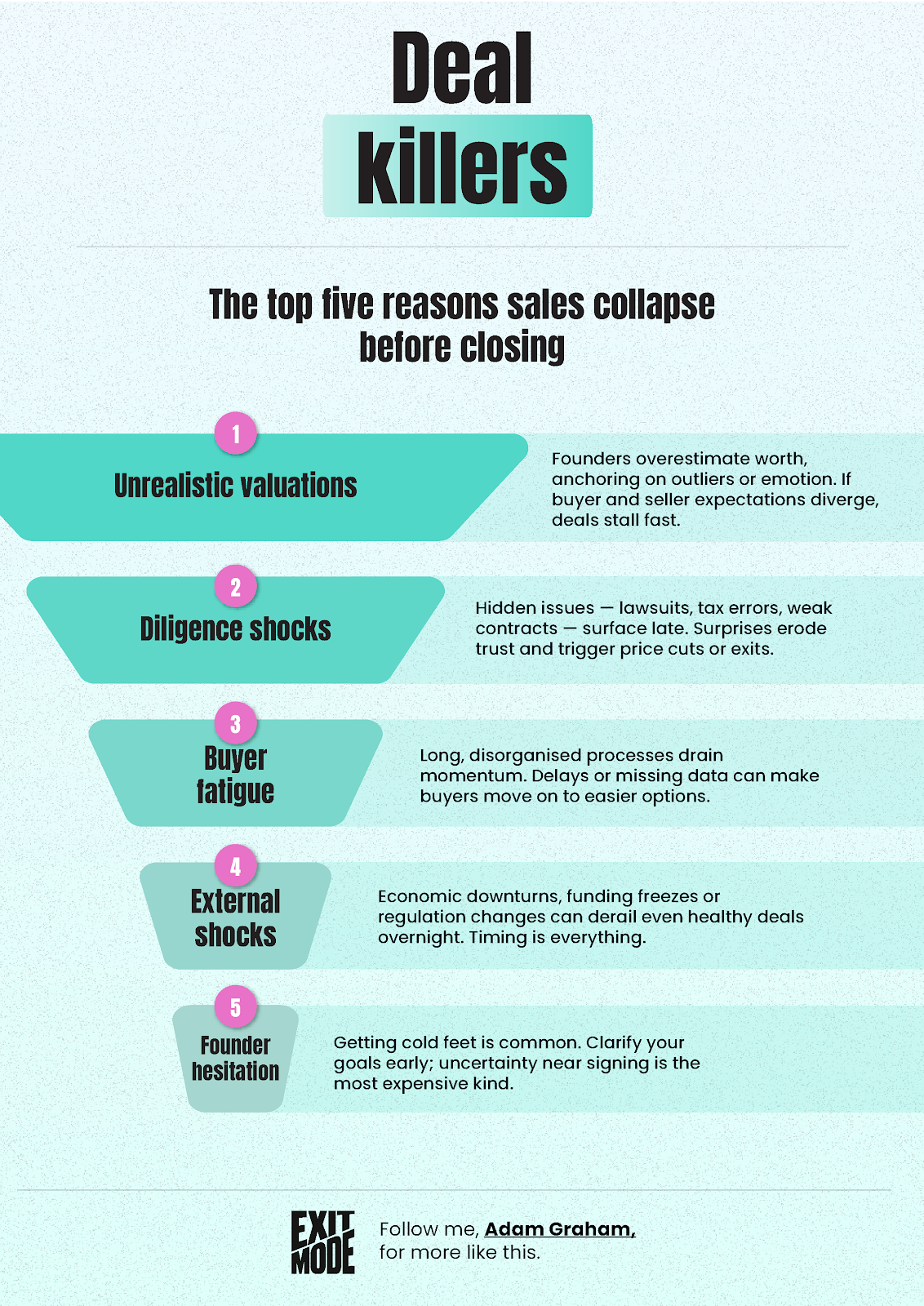
The 90-day discipline before you sell
If a sale is even a remote possibility, then preparation needs to start now. Follow this process early to protect leverage, shorten diligence and avoid discovering any weaknesses at a crucial point.
Drop me a line
I read every reply to this newsletter. If you have a counterpoint, a data point or a blind spot I’ve missed, send it. The most useful messages are specific – what you’re seeing in your market, what’s breaking, what’s working. Don’t worry about pleasantries or perfect prose, just get in touch.
Cheers!
Adam
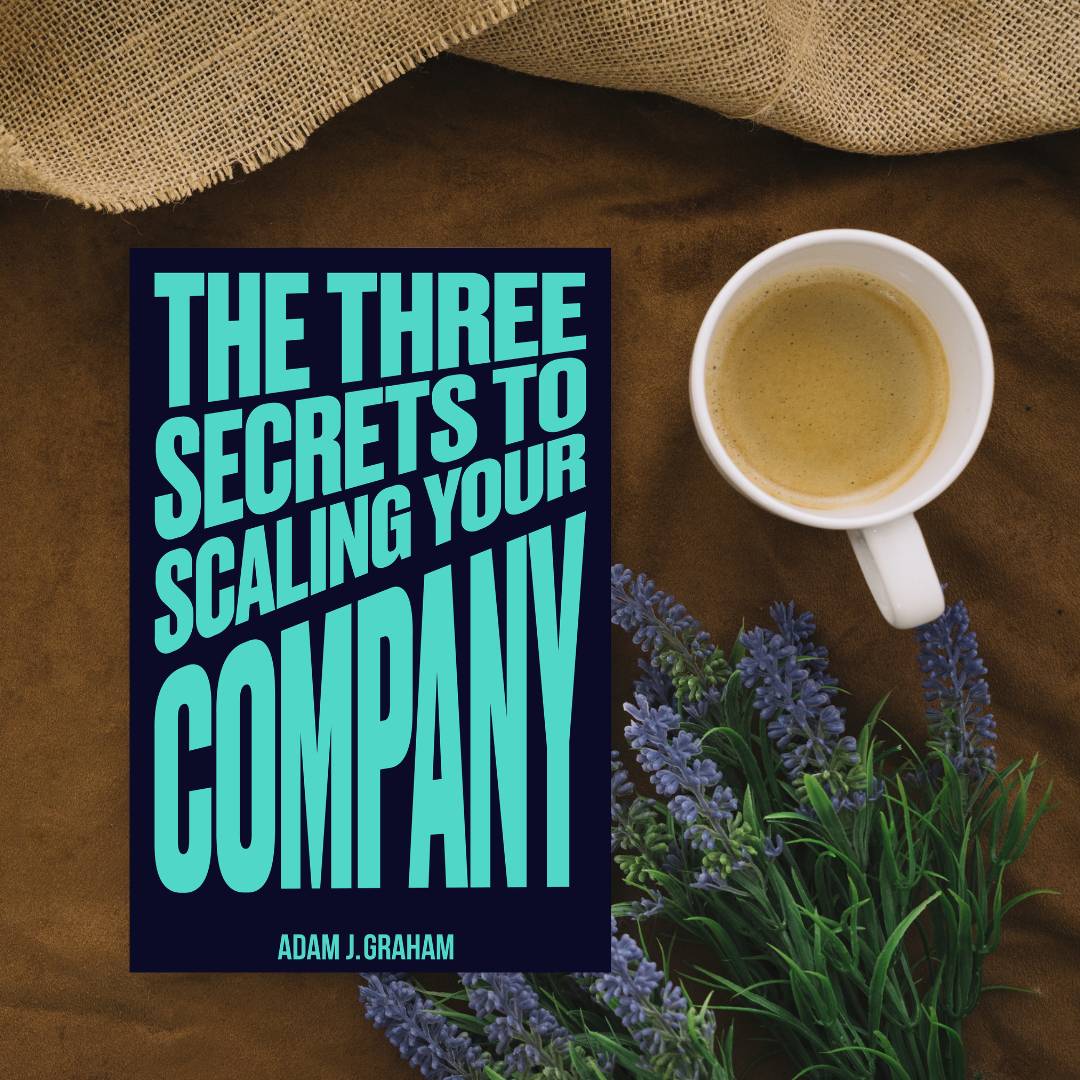 |
The Three Secrets to Scaling your Company
What does it really take to scale a company — and stay in control as you grow?
With expert insights from seasoned... Read more |